The short answer: To lower your cost per hire, stop paying to fill the same seat twice. Define the role, screen against the real job, check references and plan the first 90 days. The bill per hire barely moved from 2022: SHRM's nonexecutive median was $1,200 in 2025, against $1,244 in 2022. A re-fill pays that bill twice.
This guide is written for HR, operations and finance leaders at mid-sized employers who own hiring budgets, not for job seekers.
In this guide:
- Why Is the Second Hire the Expensive One?
- Build a Hiring Process That Prevents the Re-Fill
- Which Steps Look Optional but Pay for Themselves?
- Contract-to-Hire as a Cost Control, Not a Shortcut
- Track Cost Per Hire Alongside 90-Day Retention and Re-Fill Count
- Frequently Asked Questions
- The Cheapest Hire Is the One You Make Once
- References
Only 20% of organizations measured the quality of their hires in 2025, down from 27% in 2022, according to SHRM's recruiting benchmarking (SHRM, 2025). So four organizations in five have no measure of whether their hires worked out. That blind spot hides the most expensive line in hiring: the seat that opens again before anyone's first review. The expensive hire isn't the first one. It's the re-fill.
At Allied OneSource, we've watched what our clients buy change. Talent shortages have cooled as the main driver, and what clients are buying against now is cost control and risk. A seat you fill twice is both problems at once.
This guide covers why the second hire costs more, how to prevent it and which steps pay for themselves. It then covers where contract-to-hire fits and what to track to prove your cost per hire fell, drawing on Allied OneSource's own client work.
Why Is the Second Hire the Expensive One?
The second hire costs more because it repeats every recruiting expense for one job and adds the cost of the gap. In August 2026, U.S. employers recorded 3.1 million quits against 1.6 million layoffs and discharges (BLS JOLTS, 2026). Most separations that month were people choosing to leave, not being let go.
Read the national totals side by side and the pattern is plain. Employers made 5.2 million hires that month and logged 5.1 million total separations (BLS JOLTS, 2026). A lot of the country's hiring is replacing people who left. Manufacturing shows it clearly: 332,000 hires against 311,000 separations, and 197,000 of those separations were quits (BLS JOLTS, 2026). That's a lot of recruiting spent standing still.
The gap between hires costs money too, and it rarely shows up in a cost-per-hire report, because someone has to cover the open shift. Production and nonsupervisory workers in manufacturing averaged 3.8 hours of overtime a week in 2025 (BLS, 2026). Covered, nonexempt employees earn at least one and a half times their regular rate for hours over 40 (U.S. Department of Labor). When overtime covers an open seat, that seat gets paid for at the premium rate.
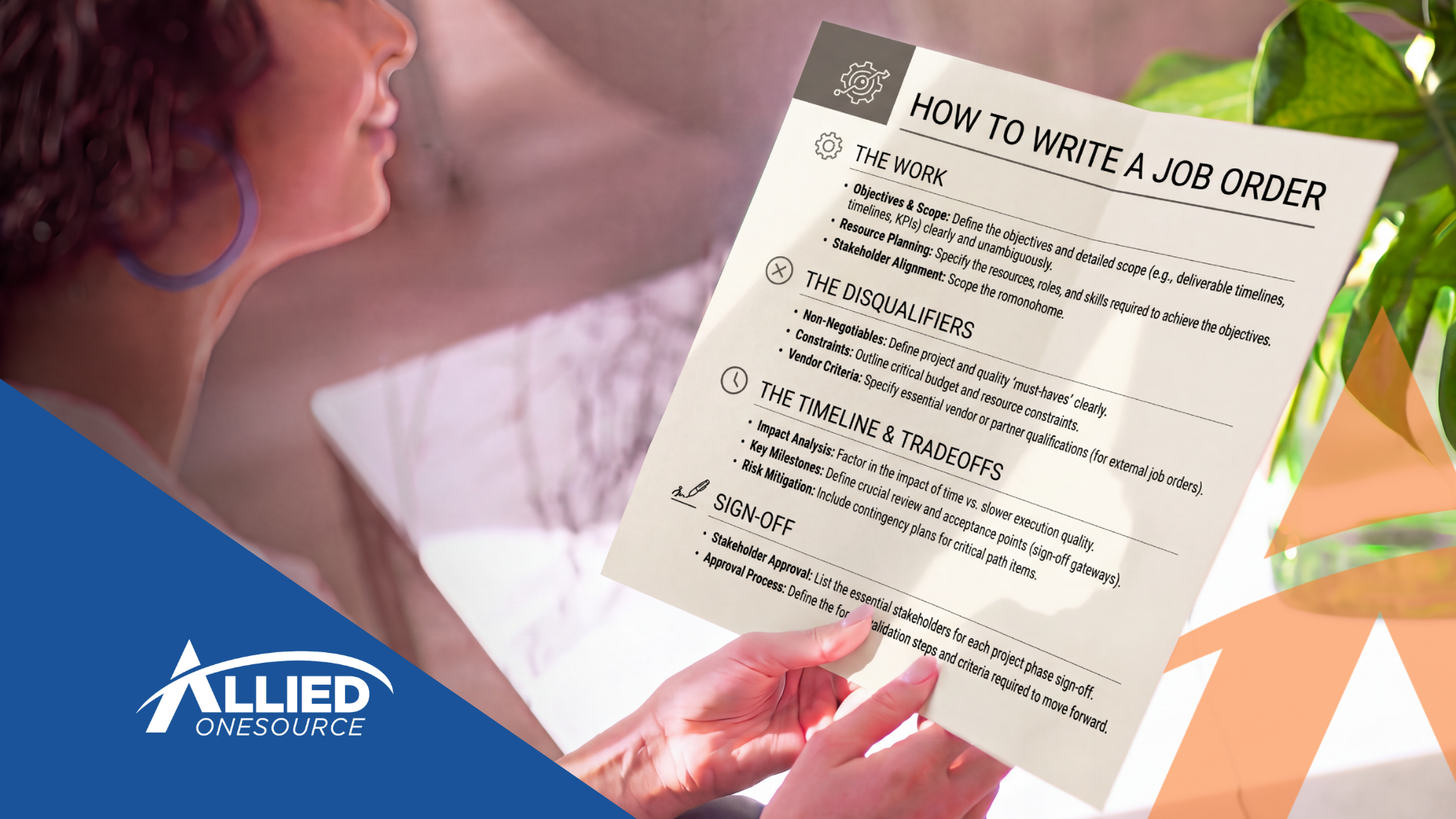
When a client tells us a seat keeps reopening, the first thing we want to know is why the last person left. Our guide to writing a job order asks for that answer on the order itself. A reason you can name is a reason you can screen for. A reason nobody wrote down tends to come back with the next hire.
Build a Hiring Process That Prevents the Re-Fill
A process that prevents re-fills rests on three foundations: a precise job order, screening against the real job and a planned first 90 days. SHRM puts the median time-to-fill for nonexecutive roles at 39 calendar days in 2026 (SHRM, 2026). An extra step adds days. A re-fill starts the whole count again.
1. Define the seat before you post it
The detail most job orders miss is the reason the last person left. Write down whether it was the shift, the drive, the pace, the supervisor or the pay before anyone starts recruiting. Then add what the job really asks for: the shift and days, the physical demands, the equipment and the experience that matters on day one. A posting built from an old description finds people who match the old description.
2. Screen against the job your people really do
Our position is simple: we don't skip steps. Screening is where skipped steps cost the most, because a résumé that matches the title can still miss the floor. Ask how candidates handled the specific conditions of the role: the shift pattern, the standing time, the tools. Check references with a former supervisor who can speak to attendance and fit. One honest reference call can head off a hire that would have reopened the seat in a few weeks.
3. Close the loop in the first 90 days
In January 2026, 20.6% of wage and salary workers had been with their employer for a year or less (BLS, 2026). About one worker in five is in that first year, and that's where onboarding does its work. Our guide to onboarding a placed worker traces many early exits to the first week: unclear shift expectations, no named contact, no one introducing the new hire to the crew. Name a contact before day one, then check in at the end of week one, at 30 days and at 90 days.
Pull your last year of hires and count the seats you filled twice. The standard is a re-fill count near zero. Every re-fill is a second cost per hire for one job, plus the overtime covering the gap. Same seats keep reopening? Let's talk it through
Which Steps Look Optional but Pay for Themselves?
The governing rule: a step pays for itself when skipping it raises the odds of a re-fill. SHRM reports that over 2 in 3 organizations struggled to hire for open positions in 2026 (SHRM, 2026). Under that pressure, the steps that feel slow get cut first. Most cost an hour or a phone call.
Shortages haven't vanished: in SHRM's 2025 survey, 61% of recruiting executives cited a lack of qualified candidates as an organizational challenge (SHRM, 2025). They've just stopped being the main thing our clients buy against. When qualified people are scarce, the temptation is to hire faster and check less. That trade looks good on the time-to-fill report and bad on the re-fill list.
The table below sets each step that gets trimmed against what skipping it can cost later.
| Step that gets cut | What skipping it saves | What it can cost later | The quick check |
|---|---|---|---|
| Intake call on the role | An hour of the hiring manager's time | A posting that attracts the wrong people | Can you name why the last hire left? |
| Screening against the real job | A day or two of recruiter time | A hire who leaves when the job turns out different | Did the candidate hear the shift and the physical demands? |
| Reference check with a former supervisor | One or two phone calls | Attendance or fit problems found on your floor | Did someone speak to attendance? |
| Realistic preview of the job | A short site walk or video | A first-week quit | Has the candidate seen where they'll work? |
| First-week check-in | Fifteen minutes | A small problem that becomes a resignation | Who calls the new hire on day five? |
Each step works for the same reason: it surfaces a mismatch while it's still cheap to fix. A candidate who learns about second shift in the interview can say no for free. A hire who learns it in week two says no on your payroll.
The play most employers miss: tell candidates the hard parts first. Lead with the heat, the standing, the early start and the overtime pattern. Some candidates will opt out, and every one who does is a re-fill that never happened. Our breakdown of facility turnover shows how to read the exits you're already seeing.
Contract-to-Hire as a Cost Control, Not a Shortcut
Contract-to-hire lets you test fit on the job before you commit to a permanent hire. Most nonexecutive seats are filled from outside, a median of 97% in 2026 (SHRM, 2026), so you know a new hire only from the hiring process. A contract period adds real work to that evidence.
It isn't the right model for every seat, and our comparison of contract-to-hire and direct hire covers when each one fits. Three triggers point toward contract-to-hire:
- The role is new or has changed. Nobody knows yet what success looks like on the floor, so a trial period answers that before the offer.
- The seat has turned over twice in a year. Something about the role or the match isn't working, and a contract period shows you which.
- Volume is uncertain. You need the people now and can't promise how many permanent seats the work will hold.
Automate the timing, never the human moment. Put the 30-day and 90-day conversion reviews on the calendar so they happen on time, and keep the conversation with the worker and the supervisor in person.
One of our longest employer partnerships shows the model at work over a decade. An intercontinental logistics client grew from about 40 employees to 250, and we helped hire more than half of that workforce across 20 job functions. When the client needed specialized IT talent, we introduced contract-to-hire, which gave it the choice to convert contractors who fit into full-time employees (Allied OneSource case study).
Which seat in your building has had three people in it this year? List what changed between each hire. If nothing changed, you're paying full price to run the same test again. Want a second read on that seat? Compare notes with us
Track Cost Per Hire Alongside 90-Day Retention and Re-Fill Count
Track three numbers for every seat: cost per hire, 90-day retention and re-fill count, measured against your own last 12 months. Cost per hire alone can mislead. SHRM's nonexecutive median has fallen 27% since 2017 (SHRM, 2025), and a falling number proves little if the same seats keep reopening.
Set the baseline before you change anything: pull last year's hires by seat, note which ones were still there at 90 days and count how many times each seat was filled. Without that starting point, you can't tell a better process from a quieter quarter.
Then read the three numbers together. If cost per hire falls but 90-day retention falls with it, you cut a step that was working. If retention holds but cost per hire climbs, look at what you spend to find candidates, not at the steps that screen them. If re-fills cluster in a few seats, the job order for those seats is the problem, not the market. Our piece on what hiring costs lays out what goes into the first number.
Frequently Asked Questions
What is the cost of hire?
The cost of hire is what an employer spends to bring one new person into a role. It usually counts recruiting costs, such as advertising, agency fees, screening and staff time. Some employers also add onboarding and training, so state which version you're using before you compare numbers.
What does cost per hire include?
Cost per hire adds up a period's external recruiting costs, such as job ads, agency fees and background checks, and its internal costs, such as recruiter pay and hiring managers' time. It then divides the total by the number of hires in that period. Overtime spent covering an open seat sits outside the formula.
How much does it cost to hire a new employee?
It depends most on the level of the role. SHRM's 2025 benchmarking put the median cost per hire for executive roles at $10,625, a 21% rise from 2022 (SHRM, 2025). Hourly and other nonexecutive hires cost a fraction of that. Benchmark each level separately.
How much does a W-2 employee cost?
Private employers paid an average of $46.89 per hour worked in total compensation in June 2026 (BLS, 2026). Benefits made up $14.07 of that, or 30.0%. The rest was wages and salaries, so the hourly wage alone understates what a seat costs.
Is it cheaper to hire a new employee or keep an existing one?
Keeping a good employee is usually cheaper. A replacement repeats the recruiting cost, and the seat runs short while the new person learns the job. The exception is a poor fit, where a careful re-hire can cost less than keeping the wrong person.
The Cheapest Hire Is the One You Make Once
Next year's hiring budget is being set now, and most budgets count hires, not the number of times each seat gets filled. Plan for both. Count re-fills by seat, protect the job order, the screen, the reference check and the first 90 days, and test uncertain roles on contract. That's how hiring spend falls without skipping a step.
We'll bring screened candidates, honest reference checks and check-ins through the first 90 days. Your supervisors bring the first-week welcome and the reason the last person left. If your re-fill count is the number you want to bring down, talk to our team.
References
- "2025 Recruiting Executives Benchmarking: Insights to Maximize Recruitment." SHRM (survey of 2,371 members, January 9 to March 3, 2025; medians). Published October 2025 (the brief carries no date; SHRM announced its 2025 benchmarking reports on October 15, 2025, and published its write-up of this brief on October 20, 2025). Verified live 2026-10-19.
- "Job Openings and Labor Turnover Summary, August 2026." U.S. Bureau of Labor Statistics (seasonally adjusted; August 2026 preliminary). Published September 29, 2026. Verified live 2026-10-19.
- "Overtime hours in manufacturing industries." U.S. Bureau of Labor Statistics, The Economics Daily (Current Employment Statistics, 2025 annual averages). Published March 31, 2026. Verified live 2026-10-19.
- "Overtime Pay." U.S. Department of Labor, Wage and Hour Division. Published undated. Verified live 2026-10-19.
- "2026 Recruiting Executives Benchmarking: Attracting Critical Talent." SHRM (data from over 4,600 organizations). Published June 24, 2026. Verified live 2026-10-19.
- "Employee Tenure in 2026." U.S. Bureau of Labor Statistics (January 2026 data). Published September 24, 2026. Verified live 2026-10-19.
- "Employer Costs for Employee Compensation, June 2026." U.S. Bureau of Labor Statistics. Published September 9, 2026. Verified live 2026-10-19.
- Allied OneSource client engagement data (proprietary): a logistics partnership, about 40 to 250 employees over a decade, more than half hired through Allied OneSource across 20 job functions, with contract-to-hire introduced for specialized IT talent; published by Allied OneSource as the case study "Catalyzing Growth: From 40 to 250 Employees in A Decade."